Playing Pickleball with Your Prosthesis
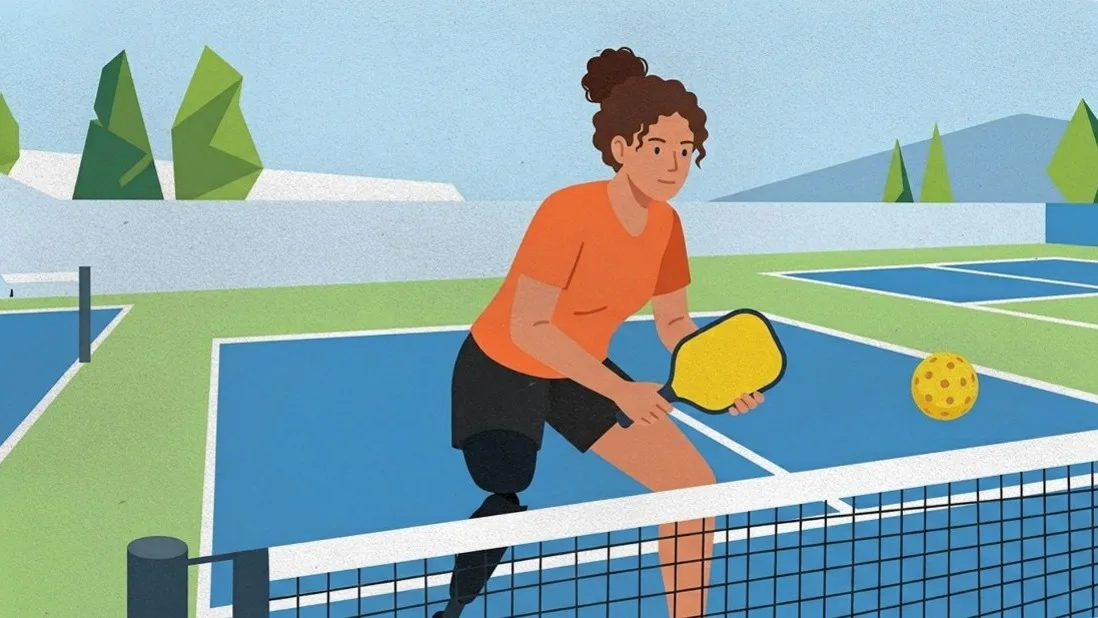
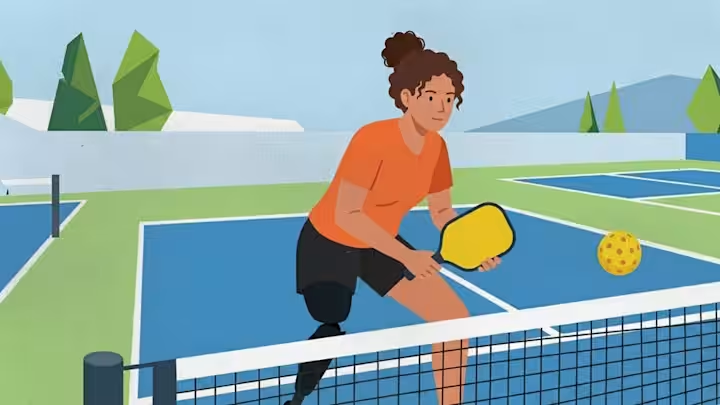
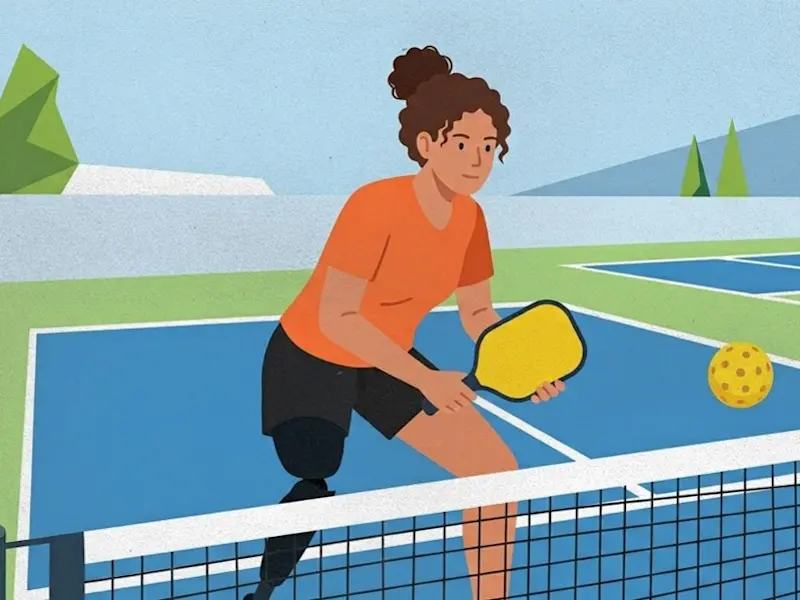
Pickleball has taken over parks and rec centers everywhere, and there's a good reason for that. It's fast enough to be fun, simple enough to learn in an afternoon, and social in a way that makes it easy to keep showing up. For people with limb loss, it's turned out to be one of the more approachable ways to get back into regular movement and, honestly, to just have a good time outside.
Can you play pickleball with a prosthesis? Most people can play pickleball with a prosthesis, and most lower-limb and upper-limb amputees can do it safely with the right setup. It's not automatic for everyone, though. A short residual limb, bony prominent areas, or sensitivity issues can affect how your socket fits under fast, high-impact movement, so it's worth checking in with your prosthetist before you start. Beyond that, the main thing is making sure your prosthesis can handle what the sport actually asks of you: quick lateral steps, hard stops, and a lot of pivoting. A device built for daily walking around the house isn't always built for that.
This article covers what active adults should know before heading to the court, from gear choices to working with a prosthetist who understands sports.
Why Pickleball Works So Well for Amputees
Pickleball didn't become this popular by accident. A few things make it a particularly good fit if you're adapting to limb loss:
Low barrier to entry. The court is smaller than a tennis court, the paddle is light, and you can learn the basic rules in one session.
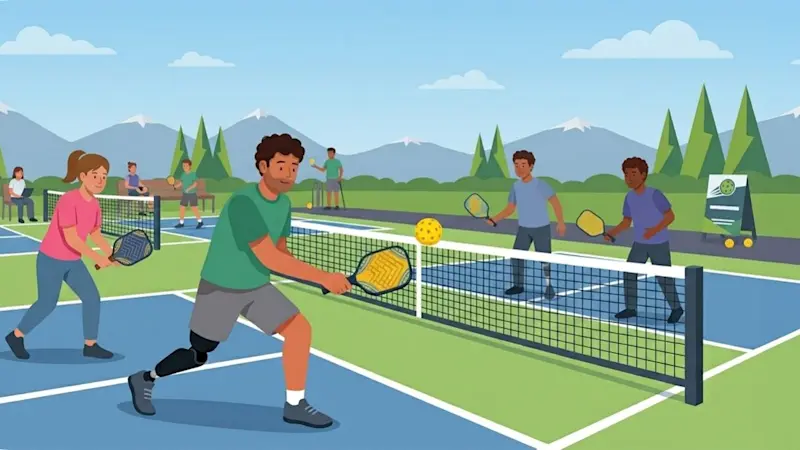
Built-in community. Most games are doubles, so you're playing alongside other people, not just against them. A lot of areas now have adaptive pickleball leagues built specifically for amputees.
Real cardio benefit. People assume it's gentle because it looks casual, but it gets your heart rate up and builds real endurance and balance.
Flexible intensity. You can keep it relaxed with friends on a Saturday morning, or push into more competitive play if that's what you're after.
For a lot of people rebuilding confidence after limb loss, that mix of low pressure and genuine physical payoff is what makes the sport stick around.
Prosthetic Considerations for Active Adults
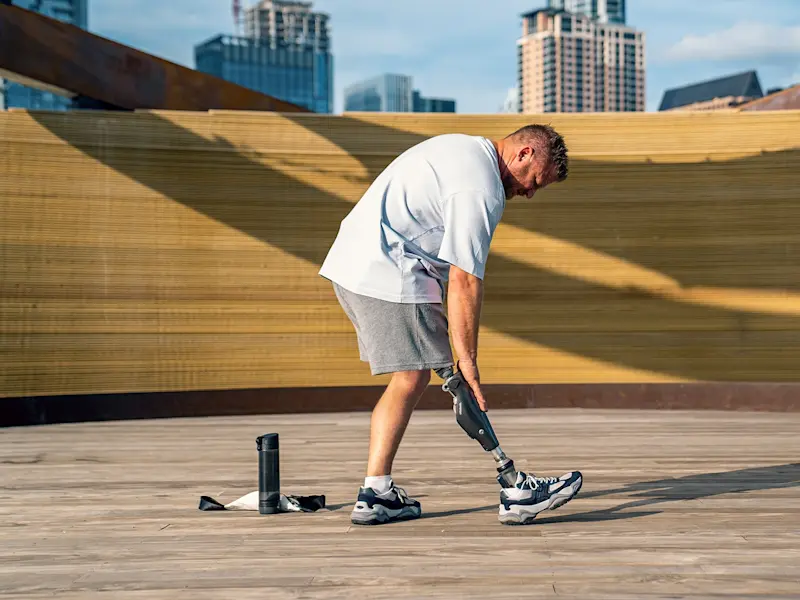
Here's something worth saying plainly: the prosthesis that gets you through errands and a normal day isn't automatically ready for pickleball. That's where prosthetics for active adults comes in. It's really just a matter of choosing devices and components built for sport-level movement instead of daily mobility alone.
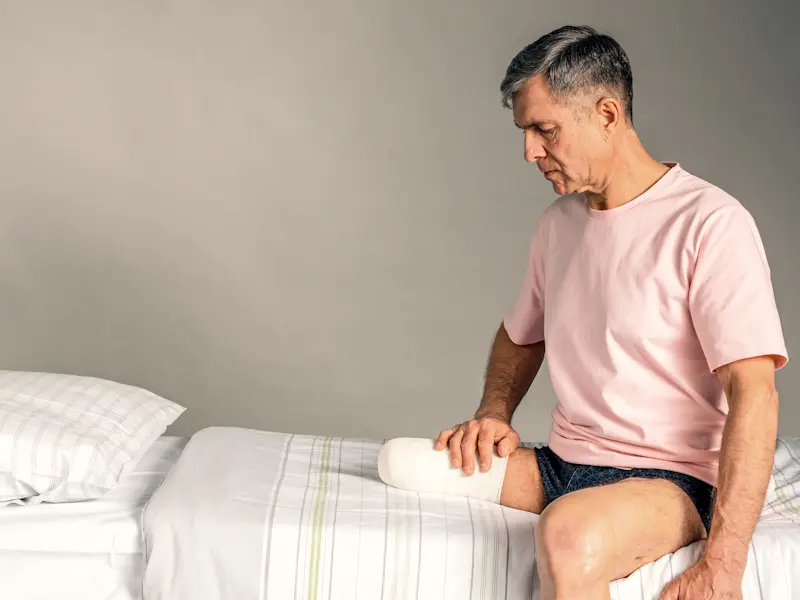
Before you start, it's worth having a conversation with your prosthetist, especially if you have a shorter residual limb, bony prominent areas, or spots that are sensitive to pressure. These aren't reasons to skip the sport. They're just things your clinical team should factor in when they look at your fit, so you're not troubleshooting a painful socket mid-match.
What the Court Actually Demands
Pickleball puts your prosthesis through motion that everyday walking never really covers:
Quick lateral steps to reach a wide shot
Sudden stops and changes in direction
Short, explosive bursts forward
Lunging toward the net, then backing up for a lob
These movements stress a prosthetic limb differently than walking does. That's exactly why component choice matters more here than most people expect.
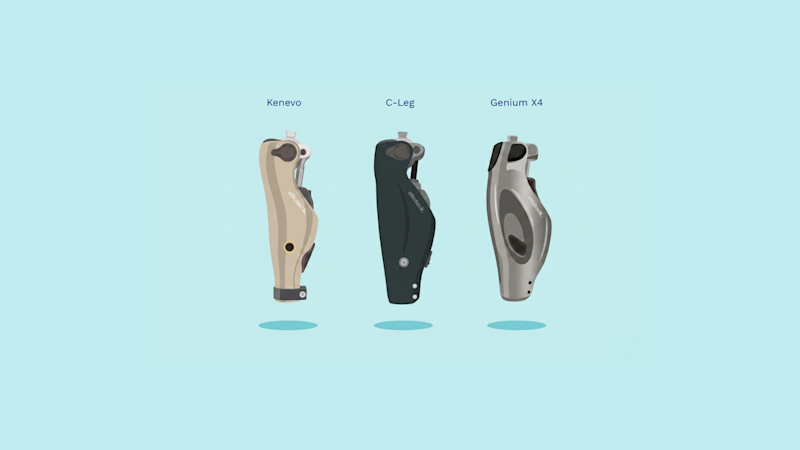
What Modern Prosthetic Technology Can Offer
For lower-limb amputees, a handful of features tend to make the biggest difference on the court:
Energy-returning feet. These store energy on impact and release it during push-off, which helps a lot during quick starts and stops.
Shock absorption. Components that absorb impact reduce the strain on your residual limb, and that adds up over a two-hour match.
Rotation and multi-axial movement. Some feet and adapters allow a bit of rotation, which protects your limb and socket during side-to-side pivoting.
A socket that fits. A socket that feels fine on a calm walk can shift or start pinching during fast lateral movement. Fit matters more here than almost anywhere else.
Upper-limb amputees have their own set of options too. Paddle grip adaptations and terminal device choices can change your control and comfort significantly. A prosthetist can walk you through what fits your grip and your swing.
Taking Care of Your Skin and Socket
More activity means more sweat, friction, and heat, and your skin has to deal with all of it. A few habits worth building:
Check your skin after every session for redness, irritation, or pressure marks
Use moisture-wicking liners or socks made for higher activity
Don't brush off small hot spots. Left alone, they tend to get worse
If irritation keeps showing up in the same spot, tell your prosthetist. That usually means something needs adjusting, not that you need to push through it
Practical Tips for Getting Started
You don't need to jump straight into a full match. A gradual approach treats your limb better and honestly makes the whole thing more fun.
Start with basic footwork drills. Before you're chasing shots, practice the lateral steps and stops the game requires, at your own pace.
Play shorter games at first. A few rounds of dinking at the kitchen line is a great way to build comfort before a full match.
Stay on top of hydration. Dehydration changes limb volume, which can throw off how your socket fits mid-game. Drink water before, during, and after.
Warm up properly. Same as any athlete, a real warm-up cuts down your risk of strain.
Check your alignment regularly. Repeated high-impact movement can shift alignment over time. If something feels off, get it checked instead of waiting.
Pack a backup. Bring extra liners or socks in case sweat or irritation becomes an issue mid-session.
Pay attention to what your body's telling you. Some muscle fatigue is normal. Sharp pain, pinching, or skin breakdown is not, so stop and reassess if either shows up.
None of this is about proving something on day one. It's about building a setup and routine you can actually stick with.
Working With Your Clinical Team
Here's the part that matters most. Your everyday prosthesis was built around your everyday goals. If pickleball is now part of the picture, your setup probably deserves a second look.
A standard walking foot, a socket dialed in for casual movement, or an older liner might hold you back on the court. That's not because anything is wrong with them. It's just that they were never built for this specific job. Your goals have grown, and your equipment should keep up.
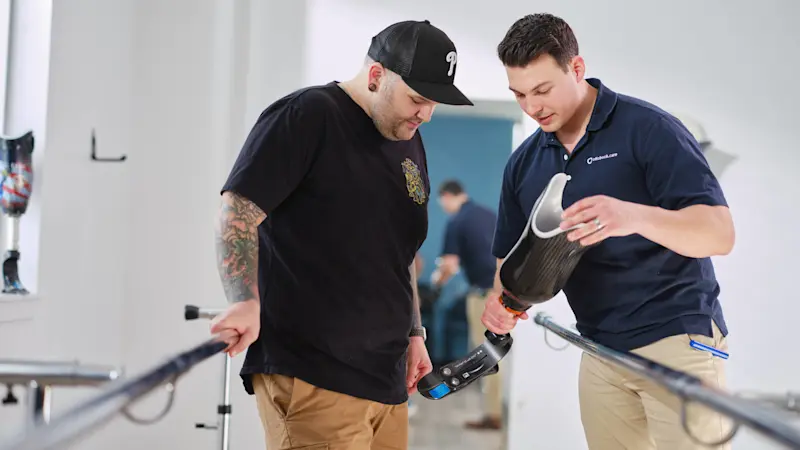
At Ottobock Care, we start with a personalized assessment. Your prosthetist will look at:
Your current device and how it holds up during fast, high-demand movement
The condition of your residual limb and how it responds to increased activity
Your actual goals, whether that's casual weekend games or something more competitive
Component options that fit your body, your sport, and your budget
From there, we work with you to fine-tune your current setup or bring in components better suited to active use. You don't have to figure any of this out on your own, and you shouldn't have to guess.
Ready to Get Back on the Court?
Limb loss doesn't have to keep you off the court. If you're picking up a paddle for the first time or trying to get back to a sport you already love, the right prosthetic setup makes the difference between playing carefully and playing freely.
Schedule a consultation at your local Ottobock Care clinic to talk with a prosthetist about your mobility goals, your interest in pickleball, and what an active-focused setup could look like for you. Your next match is closer than it feels.
Frequently Asked Questions
Playing Pickleball with Your Prosthesis: Tips, Gear & Getting Back on the Court
Disclaimer: The content in this blog is intended to educate and inform. It is not medical advice and should not replace guidance from your healthcare team. Because every patient and prosthetic or orthotic device is different, please consult your physician, prosthetist, orthotist, or therapist before making changes to your activity level, treatment plan, or use of your device.